Slope Stabilization using Steel Fibre Reinforced Concrete (SFRC)

slope-stabilization
About

Slope Stabilization

Holding the Ground. Securing the Structure.

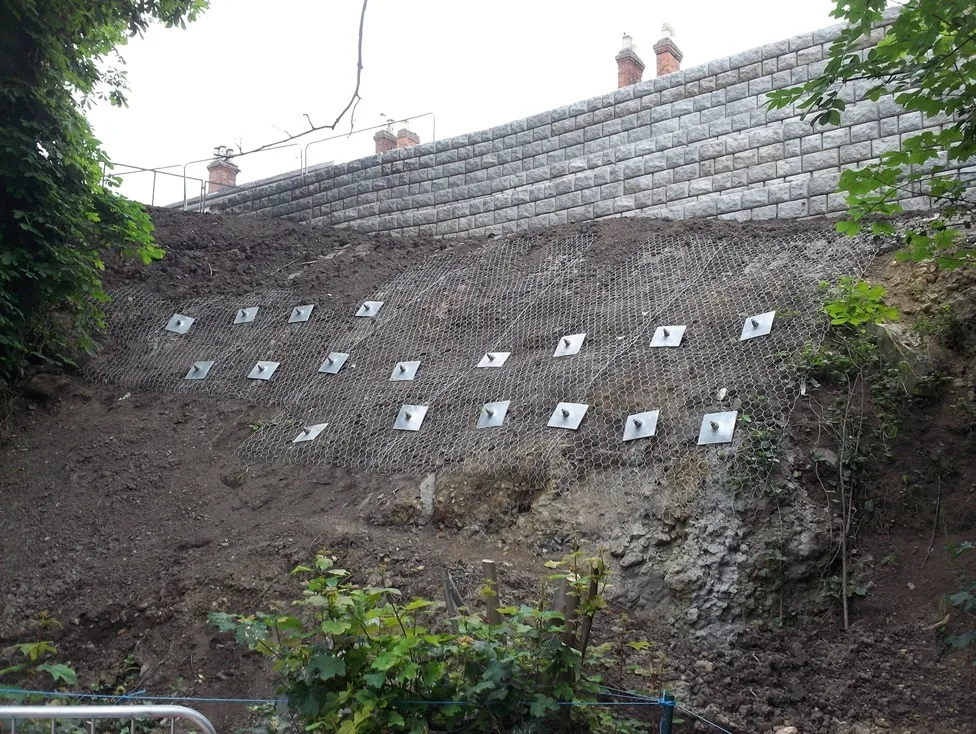
Traditional slope protection methods such as welded wire mesh, rock bolts, and conventional rebar reinforcement are time-consuming, labor-intensive, and often fail to provide uniform reinforcement across the entire sprayed surface. In contrast, Steel Fiber Reinforced Shotcrete (SFRS) provides multi-directional reinforcement throughout the concrete matrix, allowing the sprayed layer to act as a single, ductile structural skin over unstable terrain.

Slope stabilization in highways, rail corridors, mining zones, and hilly terrains requires reinforcement systems that can resist soil movement, erosion, and rockfall impact. Steel Fiber Reinforced Shotcrete (SFRS) has become the global standard for stabilizing slopes due to its superior crack control, cohesion, and energy absorption capacity.

Stewols Bansal’s SHAKTIMAN® Steel Fibers enhance shotcrete performance by improving bonding strength, reducing rebound, and increasing post-crack load resistance critical for long-term slope stability.

When SHAKTIMAN® Steel Fibers are added to shotcrete, the fibers bridge micro-cracks at the earliest stage, preventing crack propagation caused by soil movement, temperature variation, or rock displacement. This significantly improves the energy absorption capacity, surface integrity, and long-term durability of slope protection systems.

Key Benefits

Improved shotcrete cohesion and reduced rebound loss.

Superior crack control and surface integrity

High energy absorption against rockfall and soil pressure

Faster application compared to mesh reinforcement

Enhanced bonding with rock and soil strata

Hill road and highway cut slopes.

Railway embankments in hilly regions

Mining slope protection

Canal and river embankments

Tunnel portal stabilization.

Typical Applications

Quality & Compliance

ASTM A820, EN 14889-1 compliant fibers

Compatible with wet and dry shotcrete processes

ISO 9001:2015 quality-controlled production

Suggested Dosage

25–45 kg/m³ depending on slope angle and soil/rock condition