Roads & Pavements – Heavy Duty Tracks
SFRC Roads
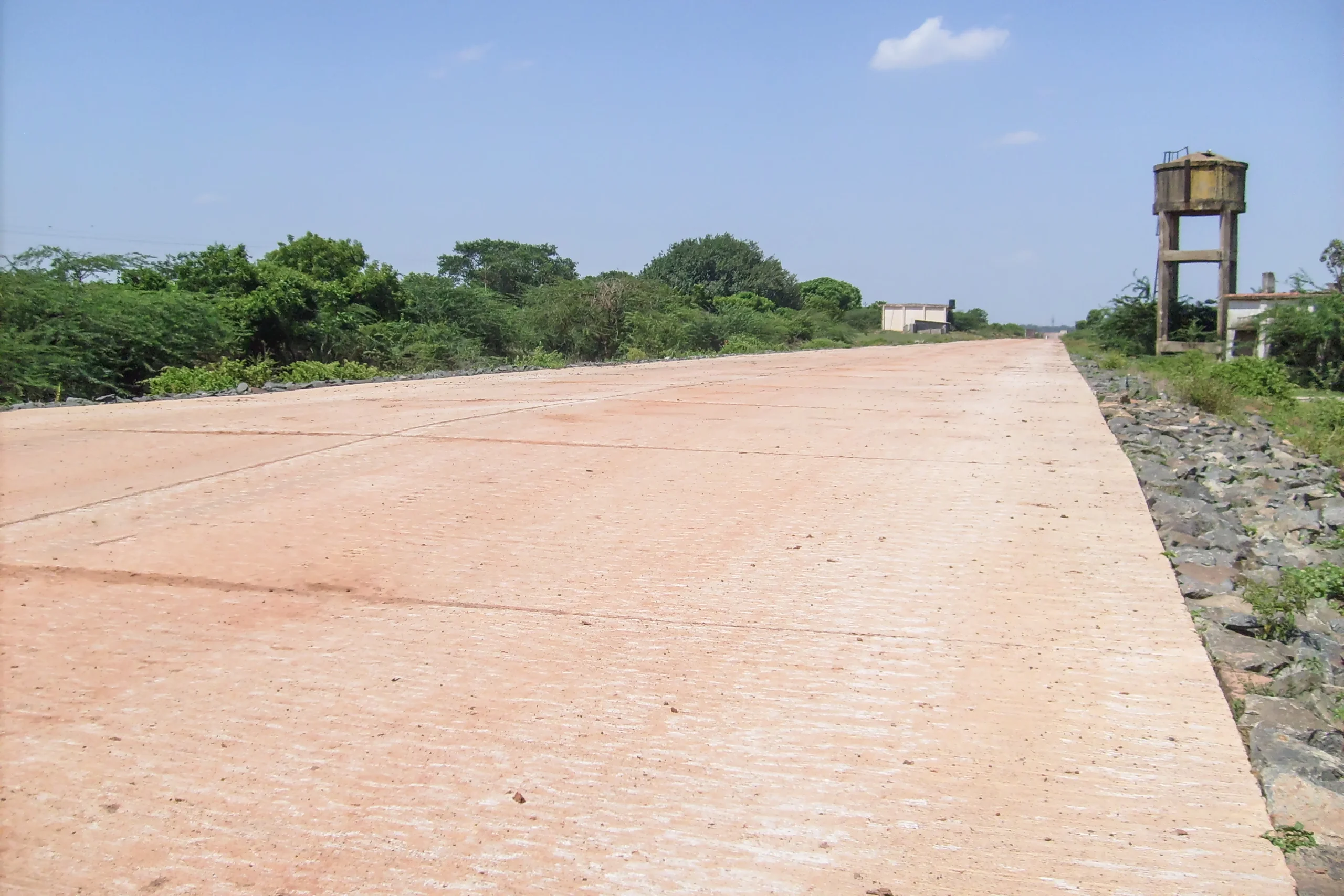
Steel fibre reinforced concrete is an excellent new type of composite material compared with ordinary concrete. SFRC’s tensile, bending, cracking and wear resistance, the impact of fatigue resistance, toughness and other properties have significantly increased, which not only allows the surface layer thinning, contraction joints spacing to increase and improve the use of road performance, extend the road life, but also to saves costs and shortens the construction period. In analysis based on the ratio of test strength, through a project example, it is confirmed that the actual steel fibre reinforced concrete applied to the old concrete pavement repair project is feasible.
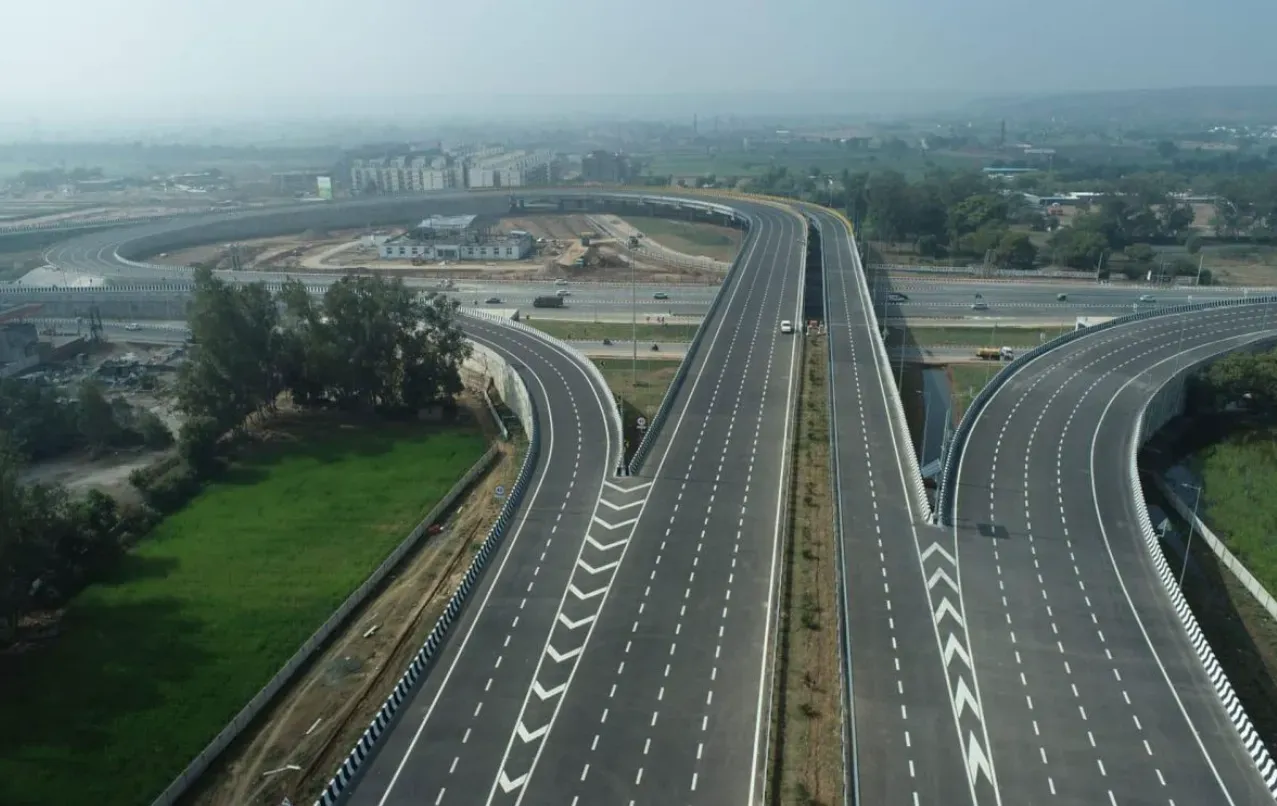
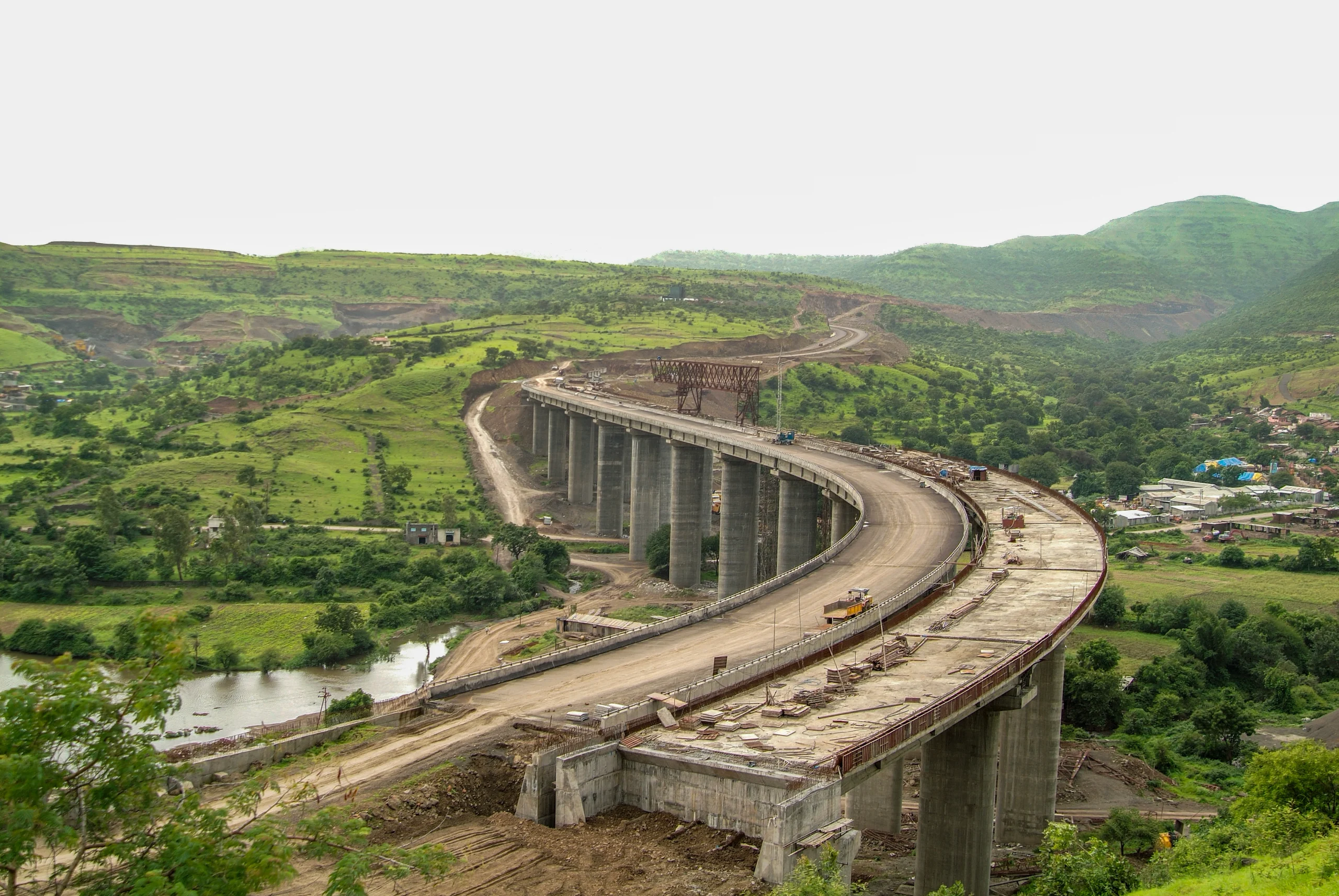
Adequately designed and well constructed SFRC roads last for 30-40 years. This is amply brought out by the splendid performance worldwide of concrete roads and pavements constructed in the 1930s and 1940s even though many of them were not designed to withstand the heavy loads of commercial vehicles and the high traffic volumes that eventually used them. It is often said that the life of concrete slab is limitless and can be prolonged to almost any desired period. This is achieved by careful design construction under strictly controlled conditions, careful monitoring of the performance, maintaining the joints periodically and providing overlays well before the slab shows any signs of cracking and failure.
Advantages of SFRC
- Design Precision & Durability
- Good Riding Quality
- Good Abrasion & Skid Resistance
- Exclusion of water
- Fuel Saving
- Reflective Characteristics
- Safer Driving
- Environment and Health
- Aids to avoid Ill effects of Oil Spillage
- SFRC roads can withstand extremes of weather.
- Practically Maintenance Free Performance
Key Benefits
Improves pavement fatigue life.
Controls shrinkage and temperature cracking
Allows reduction in slab thickness.
Reduces need for conventional reinforcement.
Typical Applications
Rigid concrete highways
Internal industrial roads
Airport taxiways and service roads
Bus lanes and BRT corridors
Bitumen Vs Concrete Cost
One of the drawbacks generally attributed to concrete roads is that they are costlier than bitumen roads. This is a very general sort of statement which, while true in certain circumstances, is far from being applicable. However, before we get down to actual cost comparisons from existing on ground situations, a few points need to be clarified.
First of all, is the fact that the Bureau of Indian Standards (BIS) has laid down that whenever an asset has to be created or built, and competing technologies/methods/materials for building the saes are available, the technology/method/material which gives the lowest life-cycle cost will be selected. Initial cost will not be the guiding factor. And in life-cycle cost, SFRC roads with their minimal maintenance requirements, invariably turn out to be cheaper than bituminous ones. The BIS directive about life-cycle cost is contained in IS-13174, which was issued in two parts. Part-I, which came out in 1991, dealt with ‘Terminology’, while Part II, which was issued in 1991, lays down the ‘Methodology’ for working out life-cycle costs.
The second point to note is that whereas a bitumen road uses between 4-5% of binding material (bitumen), a SFRC road uses between 17-18% binder (cement). Hence, a SFRC road is inherently designed for a longer and more trouble-free life.
Thirdly SFRC road being rigid, is far less affected by differences in soil conditions under it, than bituminous roads. Therefore, there will be slight difference in the thickness of a SFRC pavement constructed on a weak soil and one that is built on a good, strong sub-grade. On the other hand, a bituminous road built on poor soil may need to be double the thickness of one built on a good sub-grade.
Fourthly, properly designed bituminous pavements, generally tend to be between 20-40% thicker than equivalent SFRC pavements, which have been designed to cater for the same traffic. This difference in thickness is made up of aggregates. Since several parts of our country, including the Gangetic plain, are facing a shortage of aggregates, this factor could prove crucial in selection of pavement type.

Concrete roads and India – History
Sher Shah Suri is credited with being the Father of India’s inter-city National Highway System. It was he who, in the Sixteenth Century, built the original Grand Trunk Road, starting from near modern Peshawar and going all the way up to Bengal.
It is quite interesting to note that India was one of the earliest countries in the world to start building concrete roads. India’s first concrete was built in Madras (Chennai) in 1914, in front of the office of its Municipal Corporation. This road remained pot-hole free for an exceedingly long time despite the heavy rains in the region. This made engineers interested in the technology to build hilly roads which usually get eroded during monsoons and sometimes broken beyond use. The Dehradun – Mussoorie Highway was successfully constructed and problem of erosion successfully solved. Other roads in India followed suit in quick succession. The original Delhi-Agra (NH2), Mumbai-Pune (NH4) and Bengaluru-Mysuru roads were all built of concrete. By 1927, when the Concrete Association of India (CAI) was founded, a large number of concrete roads and highways had come up in the country. These included roads in Varanasi by the PWD in Mumbai and the Bombay Port Trust and the Bombay Municipal Corporation, and in Kolkata by the City Improvement Trust. Then in 1939, about 120 km of the Bombay-Poona Road (present NH-4) and 110km of the Bombay-Nasik Road (present NH-3) were concreted. In the same year, Bombay’s Marine Drive was initially constructed; it too was made out of cement concrete, and this pavement, is still giving excellent service, even in its sixtieth year, (the remaining carriageway of today’s Marine Drive was build in the mid 5os to cater for the ever increasing traffic on the road).
It emphasized the fact that concrete roads had a long life, required low maintenance, were water resistant and had a damage proof surface. It was this last-mentioned property that really ‘sold’ concrete roads.
Quality & Compliance
ASTM A820, EN 14889-1
IRC guidelines for rigid pavements
IS 456 compliant mix design.
Suggested Dosage
20–40 kg/m³