Steel Fibers in Tunnel Linings, Shotcrete & Gunite, Rail & Road Tunnels
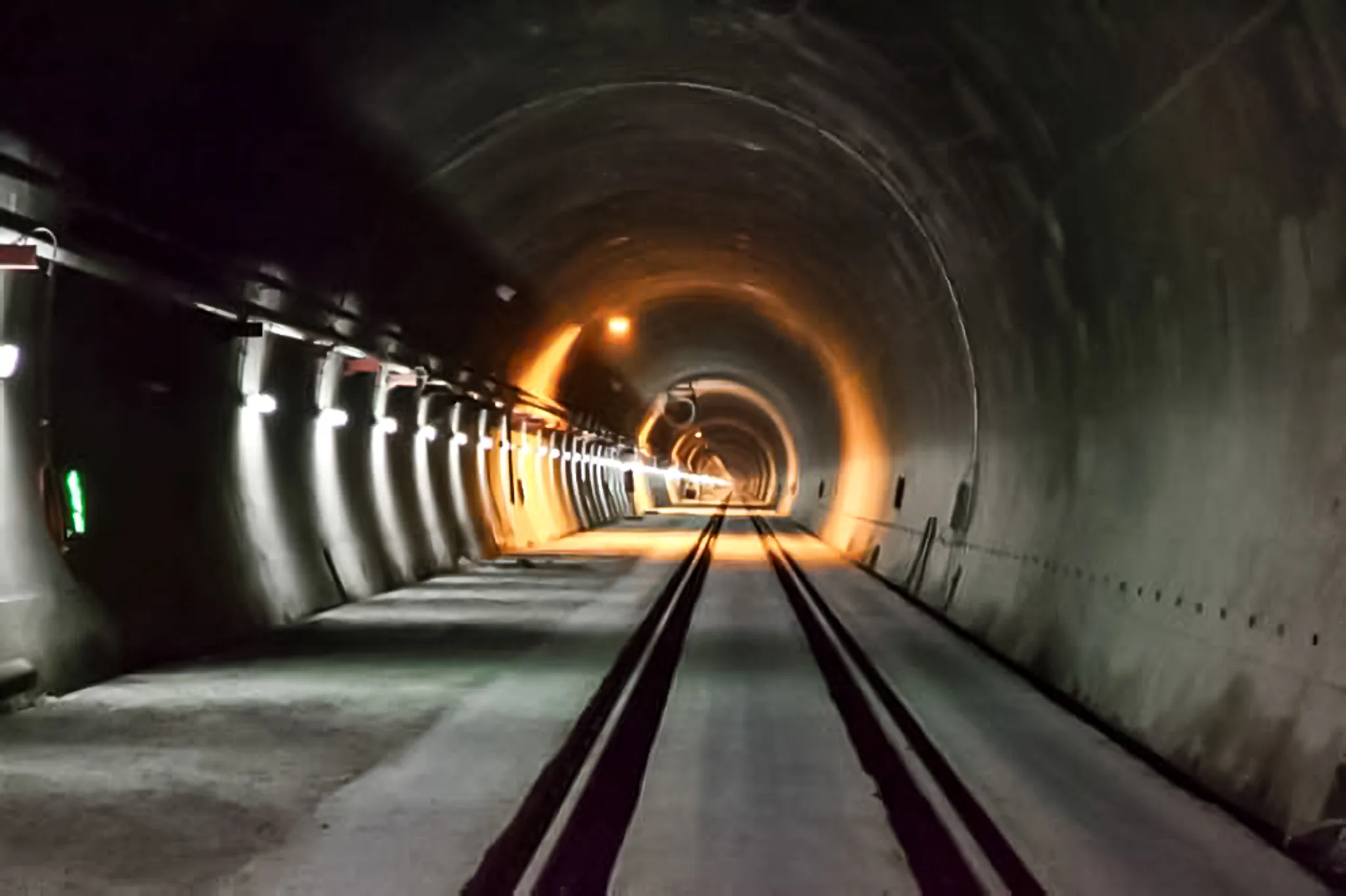
Tunnel Lining
Strength beneath the surface. Safety above all.
Modern tunnel construction demands reinforcement that delivers safety, speed, and long-term durability especially under high loads and complex geological conditions. Steel Fiber Reinforced Concrete (SFRC) has become the global standard for precast tunnel segments and in-situ linings, offering enhanced crack control, impact resistance, and ductility beyond what conventional rebar alone can provide.
At Stewols Bansal, our SHAKTIMAN® Steel Fibers are engineered to meet the rigorous demands of infrastructure projects such as metros, subways, utility tunnels, and road/rail crossings, ensuring compliance with the highest safety and performance benchmarks.
Shotcrete is an all-inclusive term to describe the spraying of concrete or mortar that may be accomplished through either a dry or wet-mix process. Gunite refers only to the dry-mix process in which the dry cementitious mixture is blown through a hose to the nozzle, where the water is injected immediately prior to application.
Both methods are compatible with Steel Fibre Reinforced Concrete technology.
“Shotcrete” using steel fibres is being successfully employed in the construction of Domes, Ground Level Storage Tanks, Caverns, Tunnel Linings, Mines, Rock Slope Stabilisation and repair and retrofitting of deteriorated surfaces and concrete. Steel fibre reinforced shotcrete is substantially superior in toughness index and impact strength compared to plain concrete or mesh reinforced shotcrete.
Key Benefits
High Post-Crack Load Capacity
Maintains structural integrity even after cracking, essential for segmental linings.
Rapid Segment Production
Eliminates traditional reinforcement cages, reducing casting cycle time.
Enhanced Ductility
Crucial for seismic zones and variable loading from earth pressure and traffic
Improved Durability
Controls shrinkage and thermal cracking during curing and service
Water Tightness
Fibers minimize crack width, supporting long-term impermeability.
Improves safety
It does not require man labour for the welded mesh reinforcement and reduces the risk of unexpected collapse or failure of the vault.
Optimizes sprayed lining thickness.
Reduces permeability.
Metro & Subway Tunnel Segments
Hydraulic Tunnels (Sewer, Water Supply)
Utility and Cable Duct Tunnels
Mining Access Shafts
NATM Shotcrete Linings
High-Pressure Pipelines in Precast Rings
Rail & Road Tunnels
Typical Applications
Why SFRC for Tunnel Lining?
Faster Production
Reduces segment casting cycle by up to 30%.
Cost Efficiency
Cuts down rebar consumption and labor.
Enhanced Safety
Minimizes risk of catastrophic failure due to crack propagation.
Tighter Tolerances
Helps achieve dimensional accuracy in ring assembly.
Quality & Compliance
Stewols Bansal’s manufacturing facilities operate under ISO 9001:2015 systems and our fibers are evaluated as per:
ASTM A820 – Steel Fibers for Concrete
EN 14889-1 – European Norm for Steel Fibers
IRC SP-91 – Indian Roads Congress Guidelines
IS 456, IS 10262 – Concrete Design Standards
All tunnel application fibers undergo:
Pull-out resistance testing
Crack mouth opening displacement (CMOD) checks.
Flexural toughness and residual strength verification
Coating validation (brass or galvanized) as per corrosion exposure
Recommended Fiber Types
Brass-Coated Micro Steel Fibers
Hooked-End Steel Fibers
Galvanized Steel Fibers
Stainless Steel Fibers (for marine/subaqueous tunnels)
Suggested Dosage
15–45 kg/m³, depending on tunnel size, concrete grade, and lining type (segmental or cast in-place)